
The Ultimate Guide to Disaster Recovery for Florida Businesses
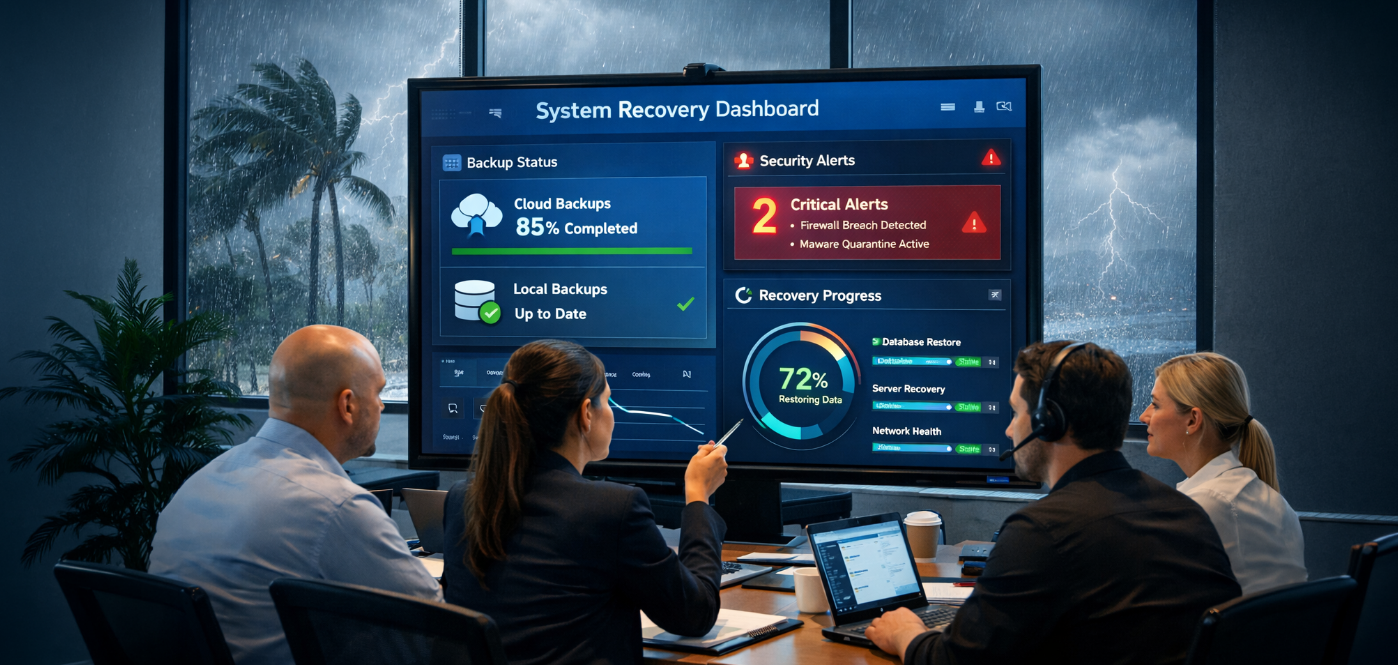
In today’s digital-first economy, Florida businesses depend heavily on reliable IT infrastructure. From secure cloud systems and client databases to communications and payment processing, uninterrupted access to technology is essential for daily operations.
However, with increasing cyber threats, ransomware attacks, and Florida’s seasonal hurricanes and severe weather events, the risk of IT disruption is higher than ever. Without a structured disaster recovery and data recovery strategy, downtime can quickly lead to lost revenue, damaged reputations, and compliance risks.
Unified Technologies helps Florida organizations build resilient IT environments designed to minimize downtime, protect sensitive data, and ensure business continuity — no matter what happens.
The True Cost of IT Downtime in Florida
IT disruptions can happen unexpectedly due to:
- Cyberattacks and ransomware
- Server or hardware failure
- Power outages
- Human error
- Hurricanes and flooding
Even a few hours of downtime can result in:
- Revenue loss
- Data corruption or permanent data loss
- Regulatory penalties
- Operational delays
- Reduced customer trust
A proactive disaster recovery plan ensures your business can restore systems quickly and maintain operational stability.
Six Essential Steps to a Strong Disaster Recovery Plan
- Conduct a Risk Assessment
Every Florida business faces unique threats. Identifying potential vulnerabilities allows you to prioritize protection strategies. Risk assessments evaluate both likelihood and impact, ensuring your plan addresses the most critical threats first. - Define Recovery Objectives (RTO & RPO)
Two key metrics guide every disaster recovery strategy:- Recovery Time Objective (RTO): How quickly systems must be restored
- Recovery Point Objective (RPO): The maximum acceptable data loss window
Unified Technologies works with Florida businesses to align RTO and RPO targets with operational and compliance needs.
- Develop a Customized Recovery Strategy
An effective disaster recovery plan includes:- Secure cloud and on-site data backups
- Redundant infrastructure
- High-availability systems
- Cybersecurity safeguards
- Geographic data replication for storm resilience
Layered protection ensures rapid data recovery and minimal downtime.
- Document and Communicate the Plan
Clear documentation prevents confusion during a crisis. A well-structured recovery plan should outline:- Roles and responsibilities
- Step-by-step recovery procedures
- Communication protocols
When every team member understands their role, recovery becomes faster and more efficient.
- Test and Validate Regularly
Testing identifies gaps before real emergencies occur. Unified Technologies conducts:- Disaster recovery simulations
- Backup restoration testing
- Failover drills
- Cybersecurity vulnerability assessments
Routine validation strengthens your response capabilities.
- Commit to Continuous Improvement
Technology evolves rapidly — so must your disaster recovery plan. Regular updates ensure your strategy reflects:- Infrastructure changes
- Software updates
- Emerging cyber threats
- Lessons learned from testing
Ongoing training keeps your team prepared at all times.
Frequently Asked Questions (FAQ) About Disaster Recovery and Data Recovery
What is disaster recovery in IT?
Disaster recovery is a structured process that enables businesses to restore IT systems, applications, and data after disruptions such as cyberattacks, hardware failures, or natural disasters.
What is data recovery?
Data recovery refers specifically to restoring lost, corrupted, or inaccessible data from backups or recovery systems after an incident.
Why is disaster recovery important for Florida businesses?
Florida businesses face additional risks from hurricanes, flooding, and power outages. A disaster recovery strategy ensures operational continuity even during severe weather events.
What is the difference between RTO and RPO?
RTO (Recovery Time Objective) defines how quickly systems must be restored.
RPO (Recovery Point Objective) determines how much data loss is acceptable in terms of time.
How often should a disaster recovery plan be tested?
Experts recommend testing at least annually, though many Florida businesses benefit from quarterly testing to ensure reliability and compliance.
Is cloud backup enough for disaster recovery?
Cloud backup is a critical component, but a complete disaster recovery strategy also includes redundancy, failover systems, cybersecurity protections, and documented recovery procedures.
How can Unified Technologies help?
Unified Technologies provides Florida businesses with customized disaster recovery and data recovery solutions designed to minimize downtime, protect sensitive information, and maintain compliance.
Secure Your Business with Unified Technologies
Disaster recovery is not just about responding to emergencies — it’s about building resilience. Unified Technologies proudly supports Florida businesses with comprehensive IT solutions that safeguard systems and protect critical data.
If you’re ready to strengthen your disaster recovery strategy, contact Unified Technologies today and ensure your business is prepared for anything.


